





How Are 3D Wooden Puzzles Made? Inside the Manufacturing Process
Before a wooden puzzle becomes a finished architectural model, mechanical vehicle or miniature scene, it begins as a collection of flat components. Those components need to be designed, printed, cut and packed so that customers can build the model successfully.
For buyers sourcing custom wooden puzzles, understanding the manufacturing process helps explain why products with similar photographs can deliver different assembly experiences. Board consistency, print alignment, connection fit and kit completeness all affect the final result.
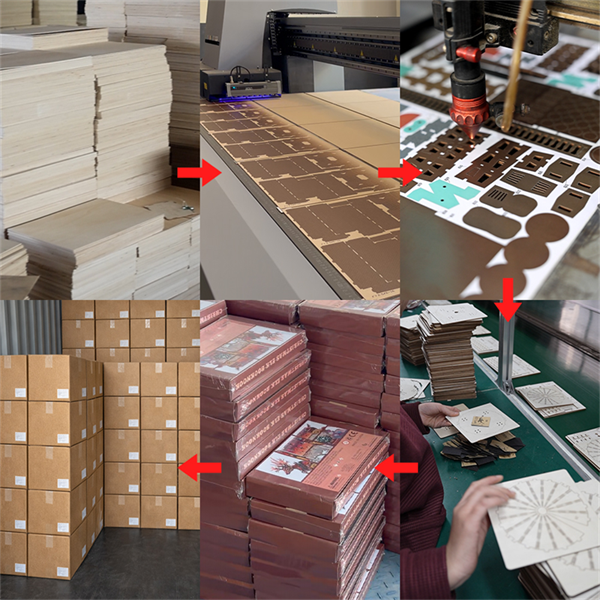
At Linyi Wooden Toys Co., Ltd., our production capabilities include six UV printers and 30 laser-cutting machines. We support OEM and ODM wooden puzzle projects, bringing structural development, printed graphics and component production together.
1. Selecting and Preparing Materials for Wooden Puzzle Production
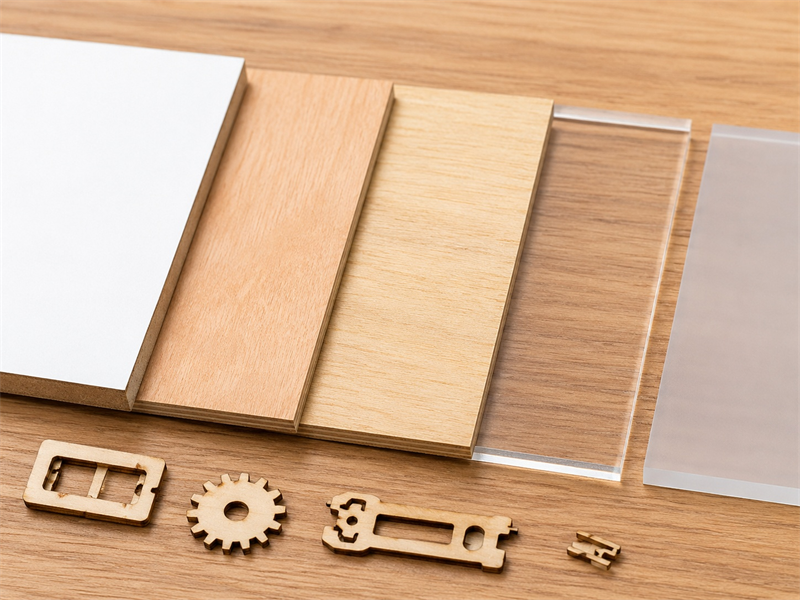
Material selection influences the appearance, strength and assembly fit of a wooden model kit.
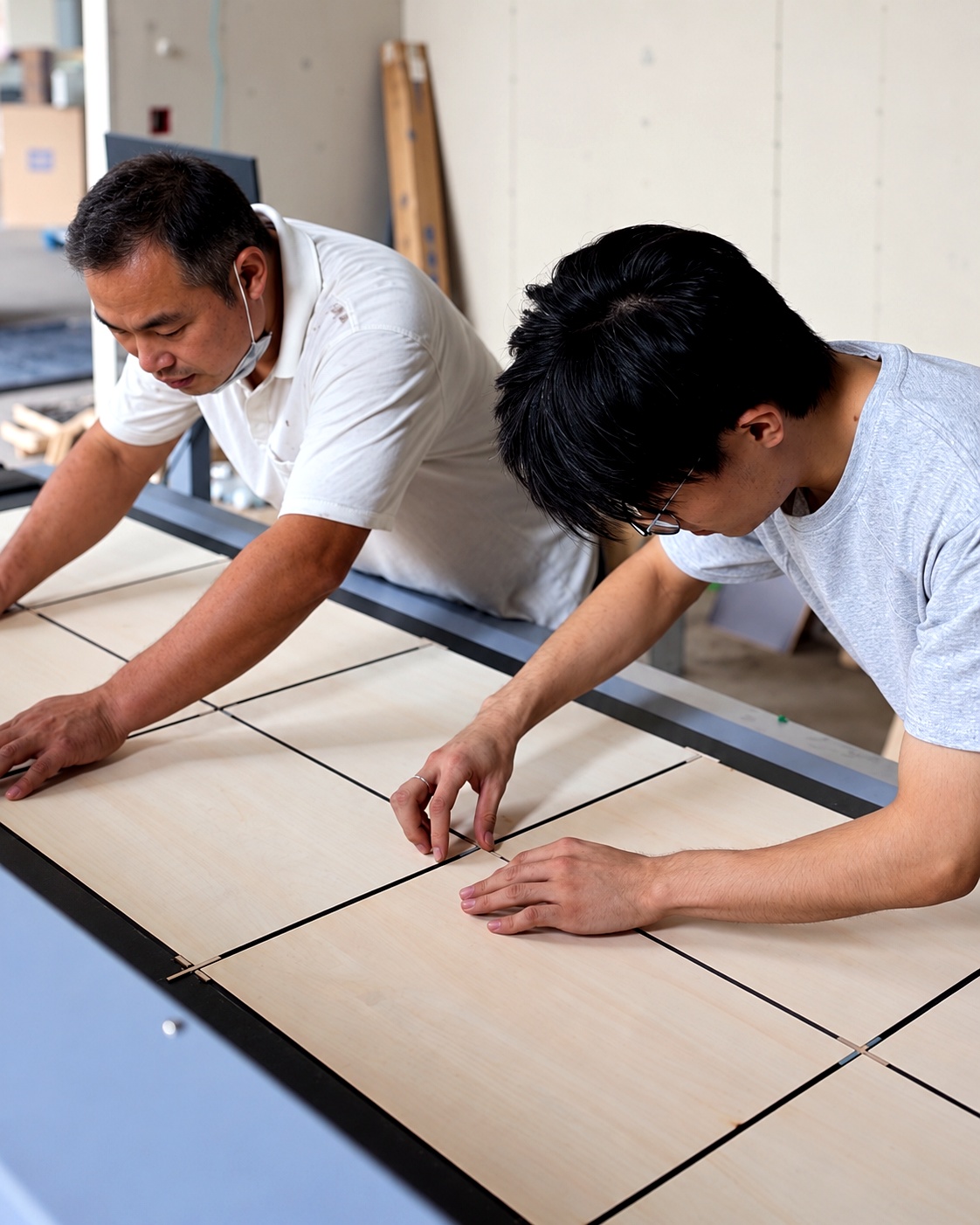
Plywood and MDF are options for different projects. Selection should consider the finished model’s size, the shape of its components, the desired surface appearance and the type of connections used.
For example, a narrow decorative piece needs a different structural review from a broad wall panel or a load-bearing base. A material that works well for one component may require adjustments when used for another.
Before production, the material review should cover:
- Actual board thickness and consistency.
- Flatness and visible warping.
- Surface defects that could affect printed graphics.
- Damaged edges or separation between plywood layers.
- Suitability for the intended cutting and assembly process
Boards also need appropriate handling and storage to protect their surfaces and maintain flatness before printing and cutting.
2. Turning the Product Design into Production Files
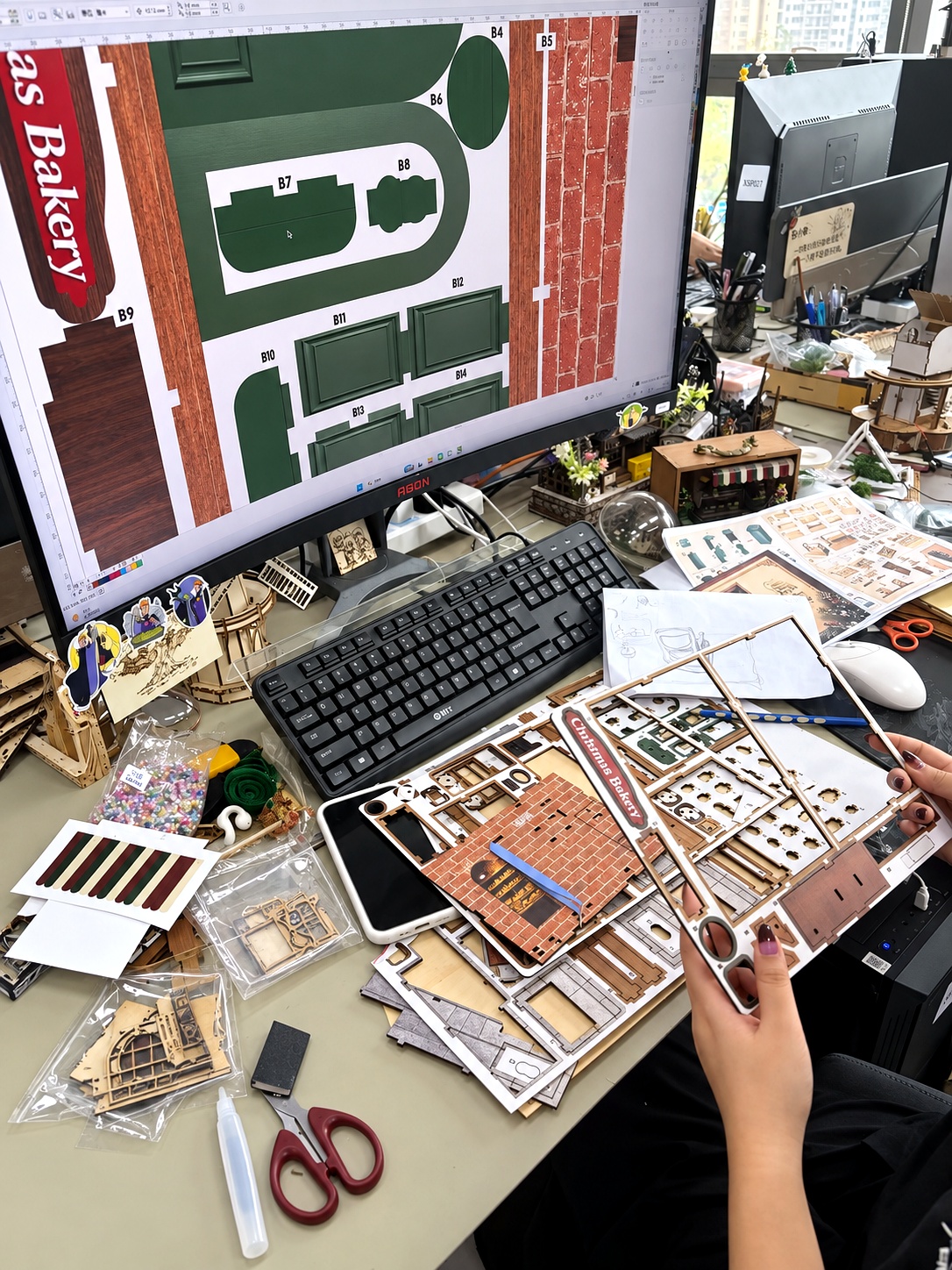
A three-dimensional concept must be translated into flat parts that can be manufactured and assembled in a logical sequence.
The production files define component outlines, slots, tabs, openings, engraving details and printed artwork. These elements should be clearly distinguished so that each machine processes the correct information.
Engineers also arrange components across the wooden sheets. This process, often called nesting, affects material usage, sheet identification and the way customers locate their parts.
Efficient nesting must leave enough room for reliable cutting and protect delicate details. Placing every component as closely as possible can make fragile areas harder to handle.
Where parts remain attached to the sheet for delivery, small retaining tabs or bridges help hold them in place. Their size and position should balance secure handling with practical removal during assembly.
Part numbers, drawing revisions and artwork versions should remain consistent throughout production. A revised structural file must be reviewed alongside any affected printing files and instructions.
3. Applying UV Printing to Wooden Puzzle Components
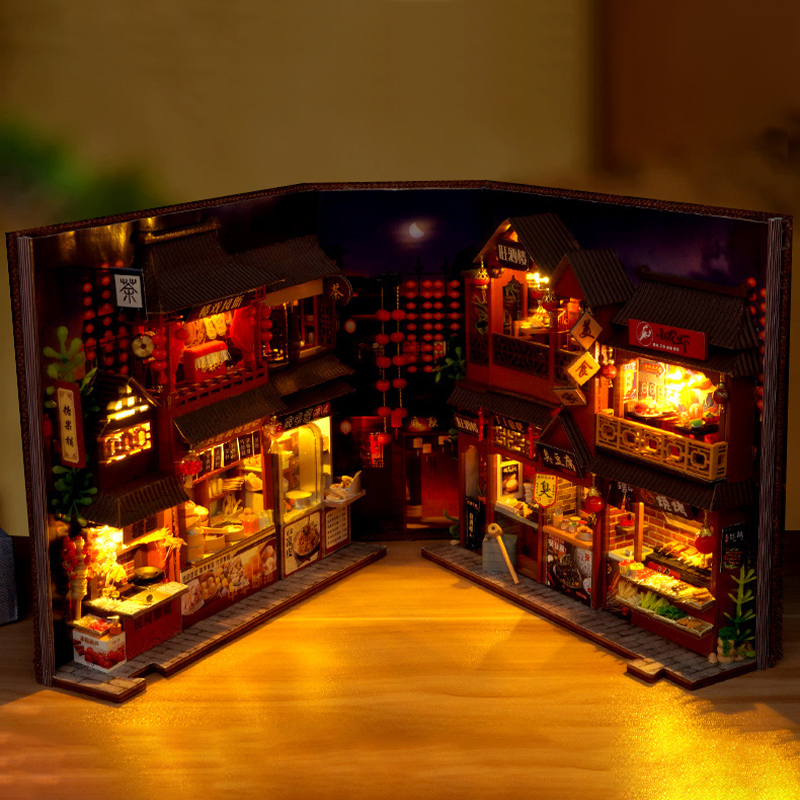
UV printing adds color, patterns and decorative details to wooden puzzle panels. It can reproduce building façades, vehicle graphics, interior decorations and branded elements directly on suitable board surfaces.
For UV-printed wooden puzzles, print alignment matters as much as the artwork itself. A window border or decorative frame may look correct on a screen but appear misplaced if it does not match the cut component.
The printing review should consider:
- Alignment between graphics and component outlines.
- Orientation of front and back artwork, where applicable.
- Legibility of small printed details.
- Color consistency against the approved physical sample.
- Surface condition and ink adhesion on the selected material.
4. Laser Cutting the Parts, Slots and Decorative Openings
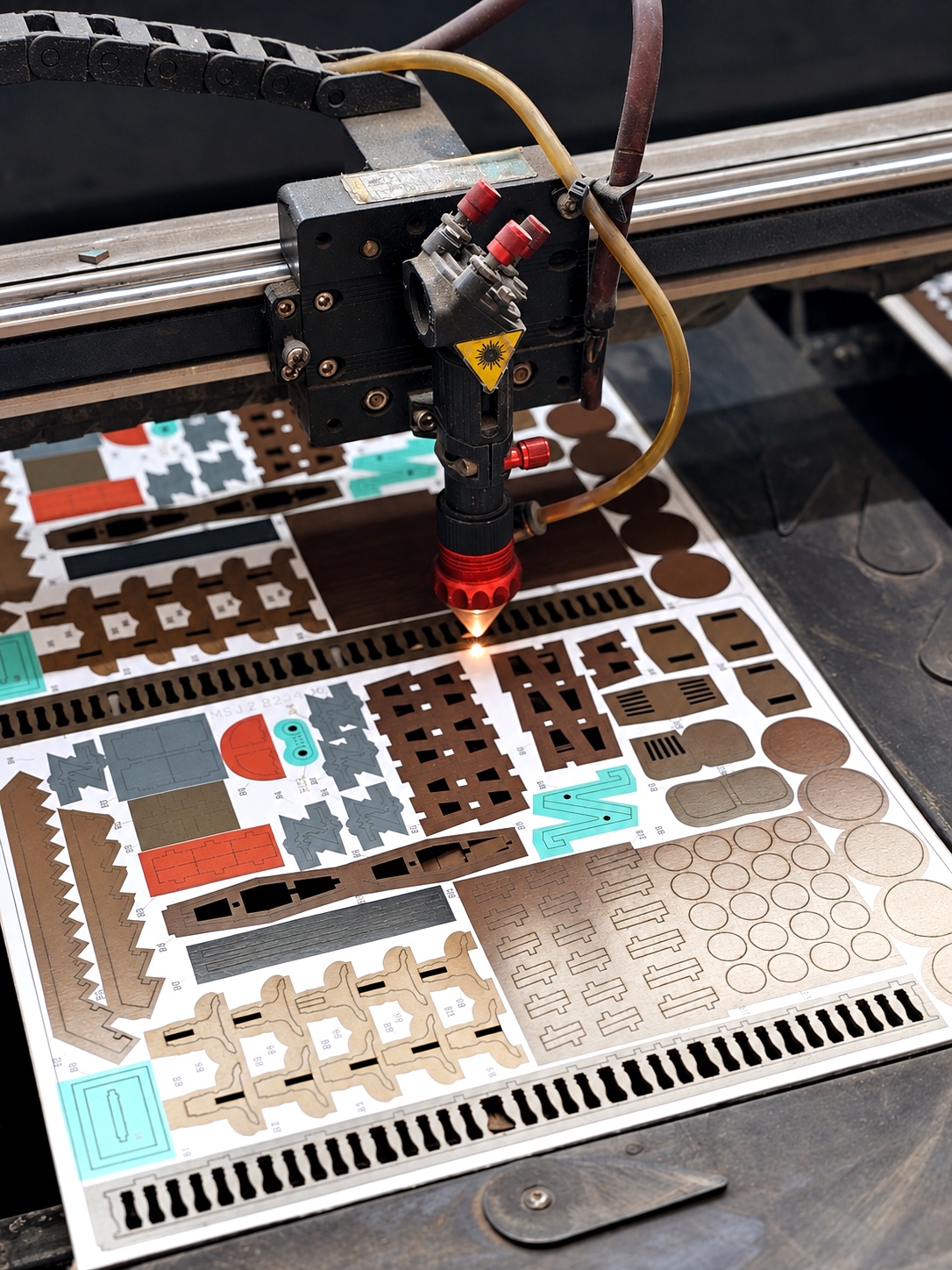
Laser cutting follows the prepared vector paths to create the individual shapes used in a wooden puzzle.
A single sheet may contain structural panels, connection slots, gears, decorative openings and small accessories. These features require a cutting setup suited to the material and the complexity of the layout.
Laser power, cutting speed and focus influence the result. Settings should be checked on the selected board before a production run, particularly when the material or component design changes.
Another consideration is the kerf, or the width of material removed during cutting. Even a small dimensional difference can affect how a tab fits into a slot. Connection dimensions therefore need to be evaluated using actual cut parts.
Laser-cut wooden puzzles typically have visible brown edges. Edge appearance should be assessed against the approved sample, alongside cutting completeness and any excessive scorching or surface residue.
For parts designed to remain in their sheets, the cutting check should distinguish intentional retaining bridges from incomplete cuts. Customers should be able to remove the components as intended without tearing away essential details.
5. Checking Component Finish and Trial Assembly
After printing and cutting, the components need to be assessed as parts of a complete model.
Checking physical sheets against the design artwork and assembly instructions helps identify mismatched details, missing features or incorrect component versions before further production.
Depending on the specification, finishing may include removing loose residue or addressing rough areas. Any finishing around connection points should be controlled because excessive material removal can change the fit.
Trial assembly provides a practical check of how the parts work together. It helps identify problems that are difficult to judge from a flat sheet alone.
Useful assembly checks include:
- Whether parts can be removed without unintended damage.
- Whether fixed connections hold securely.
- Whether delicate components require excessive insertion force.
- Whether panels align and the model stands correctly.
- Whether the assembly sequence leaves access to each connection.
6. Controlling Quality Throughout Wooden Puzzle Manufacturing
Quality control works best when the inspection points are linked to the manufacturing stage./p>
Checking material thickness before cutting, for example, can help identify a potential fit problem earlier than reviewing a completed model. Similarly, checking the first printed panels can reveal alignment issues before more material is processed.
A practical inspection plan can include the following:
| Production stage | Inspection focus | Purpose |
|---|---|---|
| Material preparation | Thickness, flatness and surface condition | Establish a suitable starting material |
| UV printing | Artwork version, color and alignment | Match the approved visual specification |
| Laser cutting | Cut completeness, part shape and edge condition | Produce usable components |
| Assembly checks | Joint fit, stability and moving clearances | Verify the building experience |
| Kit preparation | Sheet versions, accessories and instructions | Confirm the required contents |
| Final packing | Box condition, identification and carton quantity | Prepare consistent finished sets |
7. Preparing Complete Kits and Protective Packaging
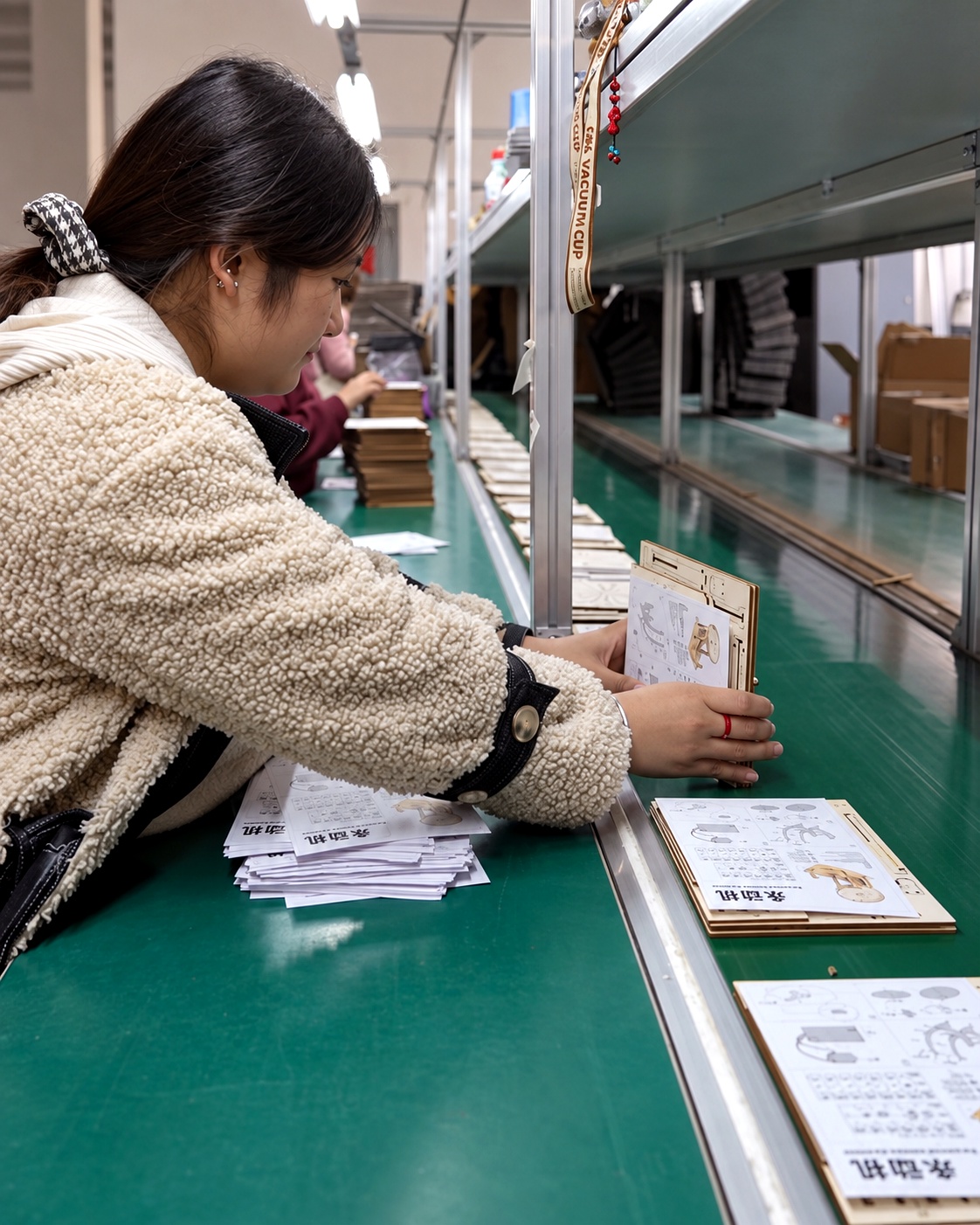
Packaging should protect the unassembled contents during storage and transport. Depending on the design, this may involve keeping fragile sheets supported, separating accessories and limiting movement inside the box.
What Buyers Should Review in a Wooden Puzzle Sample
Check how the components come out of the sheets, how the main connections fit and whether the instructions are easy to follow. Review the printed details at close range and confirm that the packaging contains the correct accessories.
For moving models, test the mechanism after assembly. For detailed architectural kits, pay attention to narrow components, panel alignment and the stability of the finished structure.